my body walked in the room before my voice could...
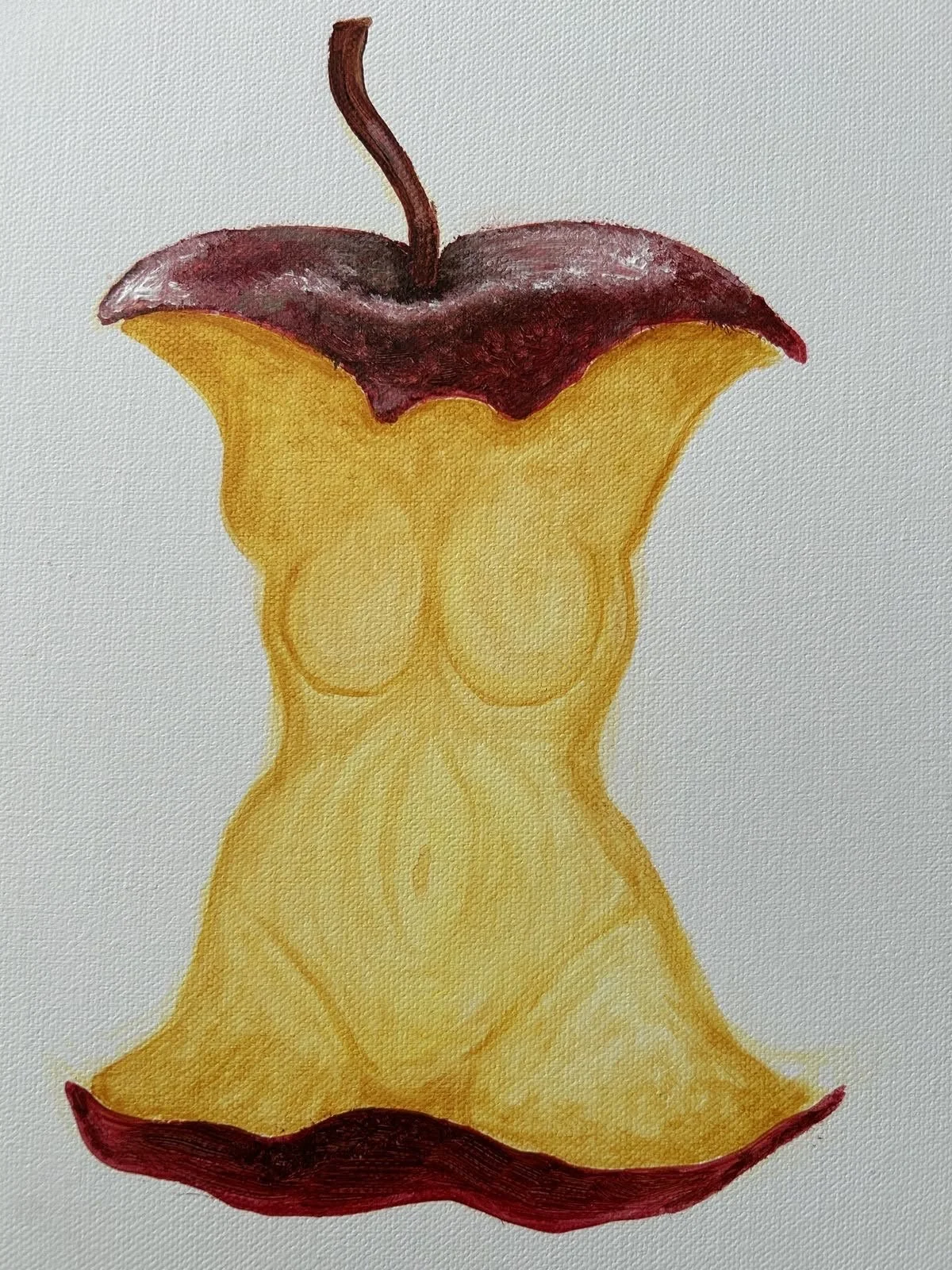
“Take that off, it’s too tight on you” are along the lines of what my mother would say when I wore the same outfits as my skinny classmates in high school. At the time, I was ignorant of the fact that it had nothing to do with what I was wearing –it was my body. The clothes I gravitated towards didn’t look like “what they were supposed to” on me. What I had hoped to look like was not how I appeared. I thought feminine, and they thought f*ckable. This is about what it means to exist in a curvy body. Existing in the world that we do in a marginalized body feels like you’re a zoo animal in a cage being stared at, eaten alive by people’s eyes. Except the cage is just a notion that comes with living in a body like mine. The mere expression of “you’re becoming a woman now” being said aloud made me feel more like I was being preyed on. I initially thought that my body did not exemplify professionalism. That contradiction stems from how I am perceived. Society categorizes different body types into boxes, but I refer to them as cages, because I did not ask to be put there.
“What markets deem curvy women desirable, and is that market only considered when it’s under the pretext of sexualization?”
Having hips and tits has been glorified since the dawn of time. The media is just a platform for publishing what we already know to be true. Women with curves are perpetually viewed as caricatures, and we have become desensitized to it. Women who are extras in music videos labeled as “sexy girl #3”; Male rappers asking a woman to do a 360 so they can see “what she’s working with”. The objectification of your body when you have curves speaks for itself before you can. This generally applies to all women. Being in the physical body of a woman and going through daily life is a radical act within itself. It is all intentionally political because of how the world objectifies women; it has nothing to do with us and all to do with systematic oppression. It begs the question: “What markets deem curvy women desirable, and is that market only considered when it’s under the pretext of sexualization?”
“It is difficult, I think, to exist in bodies we didn’t see in fashion growing up, you have to take a leap of faith. Especially when talking about body positivity, diversity and all of these things. Someone said to me that I should model. I had not considered it at all before then. I was afraid when I first put myself out there.”
- Paloma Elsesser (I-D Magazine’s 2021 Interview with Devyn Garcia )
I have frequently made it a point to highlight how the fashion industry treats women who are over a size 8, and that’s at best. I remember shopping at Forever 21 on the weekends as a teenage girl, questioning why the plus-size section had to be separate from sizes that were under 12. I unfortunately recall feeling relieved that I fell under what was considered “normally sized” at the time for my age. Puberty hit me like a truck, but not in a way that I had desired because my hips were growing wider and wider. The models in the ads I saw were dainty, and I naively defined that as femininity. I was indoctrinated to believe in beauty standards that were unattainable before I could even afford to buy clothes of my own. I wanted to be feminine, so I associated the examples I saw with “being beautiful”, despite them being so limiting. Fast forward to now, seeing women of all shapes and sizes, including those with curves, being represented has made me feel empowered. There is an influx of Instagram influencers such as @simimoonlightand @jadeybird and models like Precious Lee & Paloma Elsesser who are redefining what fashion looks like. These women are emphasizing that visibility is impactful. Despite the Ozempification of Hollywood and the world still not being ready to stop compartmentalizing everything, I find relief in the paradox of feeling seen.
Check this article out on Substack here
